

How to identify the quality of non-woven products
 Date:2020-06-17
 Browse Frequency:13427

Date:2020-06-17
Browse Frequency:13427
Non-woven fabrics are now popular, and many people buy non-woven fabrics somehow. In fact, according to the different chemical composition of non-woven fabric fibers, the combustion characteristics are also different, so that the broad categories of aluminized non-woven fabric fibers can be roughly divided. The comparison of the combustion characteristics of several common nonwoven fabric fibers is introduced as follows.
1. Polypropylene fiber: close to the flame: melt shrink; contact flame: melt, burn; leave the flame: continue to burn; smell: paraffin smell; residue characteristics: off-white hard transparent beads.
2. Cotton, hemp, viscose, copper-ammonia fiber: close to the flame: do not shrink and not melt; contact with the flame: burn quickly; leave the flame: continue to burn; odor: the smell of burning paper; residual characteristics: a small amount of gray or off-white ash.
3. Spandex fiber: close to flame: melt shrink; contact flame: melt, burn; leave flame: self-extinguishing; smell: special smell; residue characteristics: white gel.
4. Silk and wool fibers: close to the flame: curled and melted; contact flame: curled, melted, and burned; leaving the flame: slowly burned and sometimes extinguished on its own; smell: smell of burning hair; residue characteristics: loose and brittle black particles or coke shape.
5. Polyester fiber: close to the flame: melt shrink; contact flame: melt, smoke, burn slowly; leave the flame: continue to burn, sometimes extinguish itself; smell: special aromatic sweetness; residue characteristics: hard black round beads.
6. Vinylon fiber: close to flame: melt shrink; contact flame: melt and burn; leave flame: continue to burn and emit black smoke; odor: unique fragrance; residue characteristics: irregular char brown lumps.
7. Nylon fiber: close to flame: melt shrink; contact flame: melt, smoke; leave flame: self-extinguishing; smell: amino smell; residue characteristics: hard light brown transparent round beads.
8. Acrylic fiber: close to flame: melt shrink; contact flame: melt, smoke; leave flame: continue to burn, black smoke; smell: spicy; residue characteristics: black irregular beads, fragile.
9. Chlorofibre fiber: close to flame: melt shrink; contact flame: melt, burn, black smoke; leave flame: extinguish on its own; odor: pungent odor; residue characteristics: dark brown hard block.
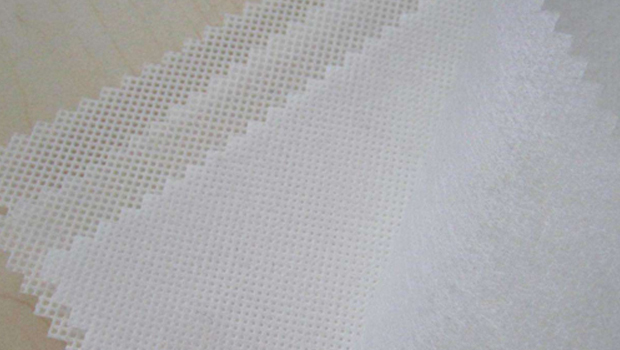
Non-woven fabrics do not have warp and weft threads. They are very convenient for cutting and sewing, and they are lightweight and easy to set.
Because it is a fabric that does not require spinning and weaving, it is simply oriented or randomly arranged textile short fibers or filaments to form a web structure, which is then reinforced by mechanical, thermal bonding or chemical methods.
It is not interwoven and braided by individual yarns, but the fibers are directly bonded together by physical methods, so when you get the sticky name in your clothes, you will find that It's impossible to pull out any thread. Non-woven fabrics break through the traditional textile principles, and have the characteristics of short process flow, fast production rate, high output, low cost, wide use, and many sources of raw materials.
The relationship between non-woven fabric and spun-bonded fabric
Spunbond and non-woven fabrics have a subordinate relationship. There are many production processes for the manufacture of non-woven fabrics, of which the spunbond method is one of the production processes of non-woven fabrics.
Spunbond nonwoven
(Including spunbond method, melt blown method, hot rolling method, spunlace method, most of the non-woven fabrics produced by spunbond method on the market now)
According to the composition of non-woven fabric, there are polyester, polypropylene, nylon, spandex, acrylic, etc.; different compositions will have completely different non-woven fabric styles. Spunbond fabrics usually refer to polyester spunbond and polypropylene spunbond; the styles of these two fabrics are very close, and can only be distinguished by high temperature testing.
Non-woven fabric is a kind of non-woven fabric, which directly uses polymer chips, short fibers or filaments to form fibers through airflow or mechanical, and then is reinforced by hydroentanglement, needle punching, or hot rolling, and finally after finishing The formed non-woven cloth. The new fiber products with soft, breathable and flat structure have the advantage that they do not produce fiber debris, they are strong, durable, silky and soft, and they are also a kind of reinforcing material. They also have a cotton feel. Compared with cotton fabrics, non-woven Cloth bags are easy to form and cheap to manufacture.
Advantage:
1. Lightweight: Polypropylene resin is the main raw material for production, with a specific gravity of only 0.9 and only three-fifths of cotton. It is fluffy and feels good.
2. Softness: Composed of fine fibers (2-3D), light spot-like hot-melt bonding. The finished product is moderately soft and comfortable.
3. Water repellent and breathable: polypropylene chips are non-absorbent and have zero moisture content. The finished product has good water repellent. It is composed of 100% fiber with porosity and good permeability. It is easy to keep the cloth dry and easy to wash.
Polypropylene nonwoven
4. Non-toxic and non-irritating: The product is produced with FDA food-grade raw materials, does not contain other chemical ingredients, has stable performance, non-toxic, no odor, and does not irritate the skin.
5. Antibacterial and anti-chemical agents: Polypropylene is a chemically inactive substance, not moth-eaten, and can isolate the erosion of bacteria and insects in the liquid; antibacterial, alkali corrosion, and finished products do not affect the strength due to erosion.
6. Antibacterial. The product is water-removing, not moldy, and can isolate the erosion of bacteria and insects in the liquid, and is not moldy.
7. Good physical properties. It is made of polypropylene spinning directly laid into a mesh and thermally bonded. The strength of the product is better than that of ordinary staple fiber products. The strength is non-directional and the strength in the vertical and horizontal directions is similar.
8. In terms of environmental protection, the raw material used for most non-woven fabrics is polypropylene, and the raw material for plastic bags is polyethylene. Although the two substances have similar names, they are far from each other in chemical structure. The chemical molecular structure of polyethylene is quite stable and extremely difficult to degrade, so the plastic bag takes 300 years to decompose; and the chemical structure of polypropylene is not strong, and the molecular chain can be easily broken, which can be effectively degraded And enter the next environmental cycle in a non-toxic form, a non-woven shopping bag can be completely decomposed within 90 days. Moreover, non-woven shopping bags can be reused more than 10 times, and the environmental pollution after disposal is only 10% of the plastic bags.
Disadvantages:
1) Compared with woven cloth, the strength and durability are poor.
2) It cannot be cleaned like other fabrics.
3) The fibers are arranged in a certain direction, so it is easy to split from the right angle and so on. Therefore, the improvement of production methods is mainly placed on the improvement of preventing division.